Can Bathrooms Make You Sick? Common Bathroom Health Risks & Prevention Tips
You step into a bathroom expecting clean and safety, but dirty habits and poor ventilation can quietly raise your risk of illness. Small things—mold in the shower, contaminated sponges, or aerosolized germs from an open toilet—can spread bacteria and irritants that affect breathing and skin.
Bad bathroom practices and hidden hotspots can make someone sick, especially people with allergies, asthma, or weak immune systems. Fixing vents, cleaning key items, and changing a few habits cuts most risks and keeps the space healthy.
They will want to know which spots to target, which products to avoid, and simple steps to protect themselves and others—keep reading to learn practical actions you can take now.
can bathrooms make you sick
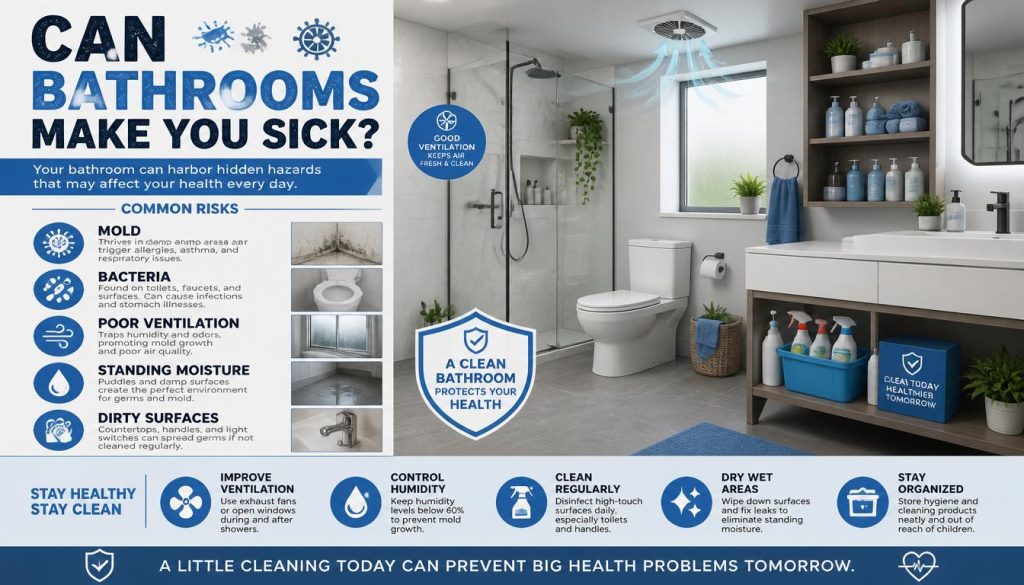
Key Takeaways
- Bathrooms can harbor germs and irritants that cause skin and breathing problems.
- Poor ventilation and shared items increase the chance of exposure.
- Simple cleaning and habit changes reduce most risks.
Common Bathroom Health Risks
Bathrooms can host germs, mold, and tiny parasites that raise the chance of infections or breathing problems. Poor ventilation, standing water, and irregular cleaning make those risks larger.
Bacterial Infections
Surfaces such as toilet seats, flush handles, sink faucets, and faucet handles can carry bacteria like E. coli, Staphylococcus, and enteric organisms from fecal contamination. These bacteria spread by touch or by cleaning tools that move microbes from one area to another.
People with cuts, weakened immune systems, or chronic illness face higher risk of skin infections and gastrointestinal illness if they contact contaminated surfaces and then touch their face or food. Regular disinfection of high-touch spots and washing hands for at least 20 seconds reduces this risk. Use EPA-registered disinfectants or a bleach solution when needed, and launder bathmats and towels frequently to limit bacterial buildup. can bathrooms make you sick
Mold and Mildew Exposure
Warm, damp areas behind showers, under sinks, and around grout promote mold growth. Common mold species such as Aspergillus and Cladosporium release spores that can irritate lungs and trigger allergies. Long-term exposure can worsen asthma and cause persistent respiratory symptoms in sensitive people. can bathrooms make you sick
Control mold by fixing leaks, running exhaust fans during and after showers, and keeping humidity below 50%. Clean visible mold with detergent and water or a diluted bleach solution for nonporous surfaces. Replace or discard heavily contaminated porous materials like ceiling tiles or moldy caulk to prevent recurrence.
Airborne Pathogens
Toilet flushing can aerosolize tiny droplets that carry viruses and bacteria into the air and onto nearby surfaces. Respiratory viruses and enteric pathogens can travel short distances, making the area around the toilet and sink potential transmission points.
To reduce airborne spread, close the toilet lid before flushing and ventilate the room with a fan or open window. Wipe down faucet handles, light switches, and counters after use, especially when someone in the household is sick. Routine hand hygiene and surface disinfection remain the most effective defenses. can bathrooms make you sick
Parasitic Contamination
Parasites such as Giardia and Cryptosporidium can appear in bathrooms when contaminated hands or surfaces contact food or the mouth. These organisms resist some disinfectants and can cause diarrhea, stomach cramps, and dehydration if ingested.
Prevent parasitic infections by washing hands after using the toilet, cleaning surfaces with effective disinfectants, and avoiding food storage or preparation in the bathroom. If a household member has a confirmed parasitic infection, increase cleaning frequency and consider professional advice for water or plumbing-related contamination.
Sources of Germs in Bathrooms
Bathrooms concentrate germs on people, objects, and in the air. Surfaces, toilet flushing, and damp spots each create different risks and need different steps to control.
Contaminated Surfaces
High-touch items like faucet handles, toothbrush holders, soap dispensers, and light switches collect skin oils, food particles, and microbes from hands and bodies. Studies and surface swabs often find bacteria such as Staphylococcus aureus, E. coli, and environmental molds on these spots. Porous materials—sponges, fabric shower curtains, and wooden shelves—hold moisture and microscopic debris that let microbes survive longer than on smooth tile or metal.
Cleaning should target both visible dirt and hidden residues. Disinfect high-touch points daily in busy homes and at least weekly in smaller households. Replace or launder sponges, towels, and bath mats frequently to break the cycle of contamination.
Toilet Aerosolization
Flushing creates tiny droplets and aerosols that can lift microbes into the air and deposit them on nearby surfaces. Pathogens such as E. coli and norovirus have been detected in toilet plume studies, especially when the toilet lid stays open. The spray can reach sinks, towels, and toothbrushes placed near the toilet.
Practical controls include closing the lid before flushing, moving toothbrushes and personal items away from the toilet, and improving ventilation. In public or shared bathrooms, limit exposed items on countertops and consider using covered storage for personal hygiene products.
Moisture Accumulation
Warm, humid air and standing water make bathrooms ideal for mold, yeast, and bacteria growth. Shower walls, grout lines, caulk, and the undersides of bath mats trap moisture and organic matter. Microbes such as Pseudomonas and Candida thrive in these wet niches and can form biofilms that resist simple wiping. can bathrooms make you sick
Reduce moisture with a running exhaust fan for at least 20 minutes after showers and by squeegeeing tile and glass. Wash towels and bath mats weekly and replace or deep-clean shower curtains and liners every month or sooner if mildew appears. Address leaks and poor drainage quickly to stop persistent damp spots from becoming long-term germ reservoirs.
Vulnerable Populations
Certain groups face higher health risks from bathroom-related germs and poor sanitation. Factors like age, chronic illness, and weakened defenses change how infections start and how severe they become.
Children and Elderly
Children and older adults get sick more easily from bathroom germs. Young children put hands and objects in their mouths and may not wash hands well. This raises the chance of picking up stomach bugs (norovirus, rotavirus) and skin infections (impetigo).
Older adults often have thinner skin and slower healing. They may take medicines that reduce saliva or change gut flora, which can increase urinary tract infections after toilet use. Mobility limits can make it harder to avoid touching contaminated surfaces or to reach sinks for handwashing.
Practical steps matter: supervised handwashing for children, frequent cleaning of high-touch surfaces, and accessible sinks and grab bars for seniors reduce risk. Using disposable seat covers or washing hands with soap for 20 seconds cuts transmission of many pathogens.
Individuals with Weakened Immune Systems
People with weakened immune systems face higher risk from even small exposures in bathrooms. This group includes people with HIV, cancer patients on chemotherapy, organ transplant recipients, and those on long-term steroids. Their bodies may not fight off common bacteria and viruses that healthy people resist.
Exposure risks include contaminated surfaces, aerosolized particles from flushing, and poor ventilation that lets microbes linger. Infections can progress faster, need stronger antibiotics, or require hospital care. Even routine pathogens like E. coli or common respiratory viruses can cause severe illness. can bathrooms make you sick
Control measures should be specific: priority cleaning of restrooms used by immunocompromised patients, HEPA or improved ventilation, no shared personal items, and prompt hand hygiene with soap or alcohol sanitizer. Health facilities often use extra precautions, and individuals should follow tailored infection-prevention advice from their clinicians.
Impact of Poor Bathroom Ventilation
Poor airflow raises moisture and spreads particles that harm air quality and building materials. Left unchecked, these problems lead to mold growth, damaged finishes, and wider circulation of microbes that can aggravate asthma and infections.
Humidity and Mold Growth
High humidity after showers or baths keeps surfaces damp for hours. Wet grout, painted walls, and wooden trim provide ideal spots for mold like Aspergillus and Cladosporium to take hold.
Mold releases spores and volatile compounds that can trigger coughing, sneezing, and eye irritation. People with asthma, allergies, or weakened immune systems face higher risk of attacks or infections when mold levels rise.
Vent fans or windows that don’t move enough air let humidity stay above 60% for long periods. That increases the chance of visible mold and hidden growth behind tiles, under flooring, and in attic spaces above bathrooms. can bathrooms make you sick
Actionable steps include running an exhaust fan during and 15–30 minutes after use, repairing leaks, and keeping relative humidity under 50%. Regular inspections of grout, caulk, and attic insulation help find mold early.
Circulation of Harmful Microbes
Toilet flushing, splashing, and damp surfaces can put bacteria and viruses into the air and onto nearby surfaces. In poorly ventilated rooms, these droplets and aerosols linger longer and spread farther.
Common organisms found in bathrooms include E. coli, Staphylococcus, and enteric viruses. While brief exposure rarely causes severe illness in healthy people, prolonged or repeated exposure raises the chance of respiratory or gastrointestinal infections in vulnerable individuals.
Poor ventilation also traps chemical pollutants from cleaners and personal care products, which can irritate lungs and worsen symptoms when combined with biological particles. Cleaning high-touch surfaces and using fans that exhaust outside reduce both microbial load and chemical buildup.
Use an exhaust fan that vents outdoors, not into attics. Increase air exchange by opening windows when weather allows and replace or clean fans and filters regularly to keep airflow effective.
Effects of Unsanitary Practices
Unsanitary bathroom habits let germs spread and let mold and bacteria grow on surfaces. These problems raise the risk of infections and breathing issues, and they reduce the safety of shared restrooms.
Improper Handwashing
Improper handwashing leaves fecal and respiratory germs on hands that touch food, phones, and door handles. They spread viruses like norovirus and flu, and bacteria such as E. coli and Salmonella, leading to stomach illness and skin infections. Short or dry handwashing (under 15 seconds) and skipping soap reduce removal of pathogens.
Hand-drying matters too. Damp hands transfer microbes more easily than dry hands. Shared cloth towels or poor air dryers increase cross-contamination.
Simple actions cut risk: wash with soap for 20 seconds, scrub all hand surfaces, rinse thoroughly, and dry fully. When soap and water are unavailable, use at least 60% alcohol hand sanitizer.
Neglected Cleaning Routines
Irregular cleaning lets grime, urine scale, and organic matter build up on toilets, sinks, and floors. These deposits feed bacteria and fungi and create reservoirs of pathogens on flush handles, faucet knobs, and toilet seats. In schools and workplaces, high-touch surfaces become infection hotspots within days if not disinfected. can bathrooms make you sick
Poor ventilation and persistent moisture allow mold and mildew to grow. Mold spores can trigger allergies and asthma flares. Using only water or infrequent cleaning products does not remove biofilm; disinfectants with EPA-registered claims for the target microbes work better.
Recommended steps include daily cleaning of high-touch areas, weekly deep cleaning of fixtures, targeted disinfection after known illness, and keeping vents or fans running to reduce humidity.
Health Symptoms Linked to Bathroom Exposure
Bathrooms can trigger breathing trouble and skin reactions. People with asthma, allergies, or sensitive skin face the highest risk from mold, dampness, and contact with contaminated surfaces.
Respiratory Problems
Mold and damp air in bathrooms release tiny spores and fragments that people breathe in. These particles can irritate the nose, throat, and lungs, causing symptoms such as sneezing, nasal congestion, coughing, wheezing, and shortness of breath.
Those with asthma often get worse symptoms after exposure. Mold exposure can also trigger asthma attacks or make inhaler use more frequent. People with chronic lung conditions or weakened immune systems may develop more severe respiratory infections.
Reduce risk by fixing leaks, using exhaust fans during and after showers, and cleaning visible mold with appropriate cleaners. If symptoms persist or worsen, a doctor can test for allergies, lung function, or possible infections.
Skin Irritations
Direct contact with mold, cleaning chemicals, or contaminated surfaces can cause skin reactions. Common signs include redness, itching, rashes, and sometimes small blisters at the contact site.
People with eczema or sensitive skin react more quickly and may need stronger skin care measures. Harsh disinfectants and bleach can strip skin oils and worsen irritation, so wearing gloves while cleaning helps protect hands. can bathrooms make you sick
If a rash does not improve after avoiding the trigger, seek medical advice. A clinician can recommend topical treatments, patch testing for allergens, or safer cleaning products to prevent repeat exposure.
Preventive Measures and Best Practices
Focus on removing germs from surfaces, increasing fresh air, and practicing simple hygiene steps that cut transmission risk. Use the right cleaners, run ventilation, and keep hands and shared items clean.
Effective Cleaning Strategies
They should clean high-touch surfaces daily when someone is sick, and at least weekly otherwise. Use EPA-registered disinfectants or a bleach solution (1/3 cup bleach per gallon of water) for toilets, faucet handles, and light switches. Always follow the product label for contact time so the disinfectant actually kills germs.
Clean before disinfecting: remove dirt and soap scum with detergent so the disinfectant can work. Pay extra attention to the toilet seat, flush handle, sink edges, and toothbrush holders. Use disposable wipes or dedicated cloths for the bathroom, and wash reusable cloths in hot water after use. can bathrooms make you sick
Avoid mixing cleaners such as bleach and ammonia. Open a window or run the fan while using strong chemicals to reduce inhalation risk. Store products out of reach of children and label homemade solutions clearly.
Improving Airflow
They should increase ventilation to lower airborne germs and moisture that feed mold. Run the bathroom exhaust fan during and for 10–20 minutes after showers or baths to remove humid air. If no fan exists, open a window or leave the door cracked to let fresh air move through.
Households can add a small window fan that pulls air out or use a portable HEPA air purifier placed near the bathroom doorway. These reduce aerosolized particles, especially after toilet flushing or when someone is sick. Clean or replace fan and purifier filters per the manufacturer schedule.
Control humidity with a hygrometer and aim for 30–50% relative humidity. Lower humidity slows mold growth and reduces microbial survival on surfaces.
Personal Hygiene Habits
They should wash hands with soap and water for at least 20 seconds after using the toilet and before touching shared items. Handwashing removes germs more reliably than hand sanitizer when hands are visibly dirty. Showers and sinks should use separate, regularly washed towels for each person. can bathrooms make you sick
Close the toilet lid before flushing to reduce spray of droplets. If a household member is ill, assign them a separate bathroom if possible, or disinfect surfaces after each use. Encourage responsible use of hand dryers versus disposable towels in public restrooms; paper towels reduce spread by containing particles.
Keep toothbrushes covered but upright and store them away from the toilet to prevent contamination.
Summary of Key Takeaways
Bathrooms can harbor many germs because they are moist and used often. Surfaces such as toilet handles, sinks, and shower items can carry bacteria, viruses, and fungi that transfer to hands and personal items.
Closing the toilet lid before flushing helps limit spread of droplets. Regular cleaning and disinfecting reduce germ levels; high-touch areas need attention at least weekly and more often if someone is sick. can bathrooms make you sick
Storing toothbrushes and personal care items away from the toilet and spray zones lowers contamination risk. Sponges, loofahs, and damp toys can grow microbes and should be cleaned or replaced regularly.
Handwashing with soap after bathroom use breaks the chain of infection. Washing hands properly is one of the simplest and most effective ways to avoid illness linked to bathroom germs.
They should choose cleaning products that match the surface and follow label instructions. Overusing harsh chemicals like bleach on every surface isn’t necessary and can cause damage or irritation if misused.
Simple habits cut risk: close the lid, wipe high-touch spots, dry surfaces to limit moisture, replace soggy items, and wash hands. These steps keep bathrooms healthier without extreme measures.
FAQS
What common bathroom items carry germs?
They often include sponges, loofahs, toothbrush holders, and wet towels. These items stay damp and can grow bacteria and mold if not cleaned or replaced regularly.
Can bathroom mold make someone sick?
Yes, mold can trigger allergies, asthma, and respiratory irritation in sensitive people. Those with lung conditions or weakened immune systems face higher risks and should limit exposure.
Does toilet flushing spread germs?
Flushing can aerosolize tiny droplets that land on nearby surfaces. Closing the lid and cleaning surfaces often lowers the chance of spread. can bathrooms make you sick
How often should a bathroom be cleaned?
High-touch surfaces like faucets, toilet handles, and counters should be wiped at least once a week. Showers and floors may need more frequent attention if moisture and soap scum build up.
Are air and ventilation important?
Good ventilation reduces moisture and mold growth. A working fan or an open window after showers helps keep the room dry and lowers health risks. can bathrooms make you sick
What simple daily habits help keep a bathroom safe?
Use a squeegee or towel to remove shower water after use. Hang towels to dry, replace sponges and loofahs monthly, and wash mats and towels regularly.
When should someone call a professional?
If mold covers large areas, leaks continue despite fixes, or people have persistent health symptoms, a professional inspection or mold remediation is wise.
Tag:
What kind of infections can you get from a toilet seat
Can a woman get infection from toilet
Can you get STD from public toilet
Can you get diseases from toilet water splash
Can you catch anything from urine on a toilet seat
Can you get a yeast infection from a toilet seat


