How to Measure Ring Size at Home
Use a printable ring sizer or an existing ring for the most accurate at-home result. If you only have string or paper, measure twice and recheck before you order.
If you need to know how to measure ring size at home, the most reliable approach is to use a printable ring sizer or measure an existing ring against a sizing chart. If you do not have those tools, a string or paper strip can work in a pinch, but it needs extra care to avoid an inaccurate fit.
For a smart-home audience, the best at-home setup is the one that is simple, repeatable, and easy to double-check before you order anything custom.
- Best method: Printable ring sizers and ring gauges are usually more reliable than string.
- Fit matters: Wide bands, stackable rings, and knuckle size can change the best choice.
- Check timing: Measure when your hands are at a normal temperature and not swollen.
- Double-check: If you land between sizes, compare both nearby options before buying.
How to Measure Ring Size at Home: The Fast, Accurate Way
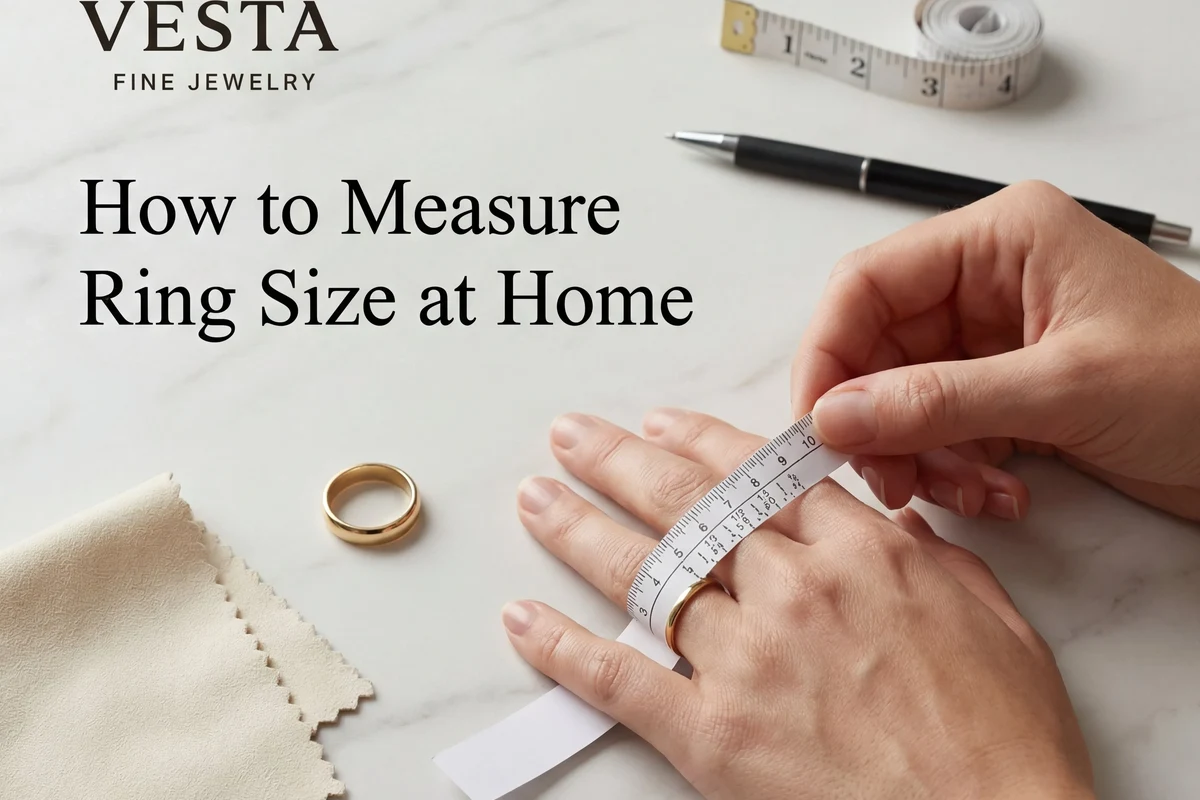
The fastest accurate method is to compare your finger or a current ring to a ring-size chart from a reputable jeweler or manufacturer. In 2026, many brands still offer printable sizing guides, but the key is to print them at 100% scale and verify the page did not shrink or stretch during printing.
If you want the safest general rule: measure more than once, compare two nearby sizes, and choose the one that matches how the ring will actually be worn. That matters because a thin band, a wide band, and a stackable ring can all feel different on the same finger.
What Ring Size Means and Why Getting It Right Matters
Ring size is a standardized way to describe the inside circumference or diameter of a ring, depending on the sizing system used by the brand or country. In plain terms, it tells you whether a ring will slide on comfortably and stay secure without pinching.
Getting the size right matters for comfort, appearance, and cost. A ring that is too tight can feel uncomfortable as your hands swell during the day, while one that is too loose may spin, slip, or need resizing later. For gifts and proposals, a close estimate is often good enough, but for everyday wear, accuracy is more important.
It also helps to remember that fingers are not static. Temperature, hydration, activity, and even the time of day can change how a ring fits, which is why a single quick measurement is not always enough.
Best At-Home Ring Measuring Methods in 2026
There are three practical ways to measure ring size at home: a printable ring sizer, an existing ring, or a string/paper strip method. Each has a different balance of convenience and accuracy, so the best choice depends on whether you are buying for yourself, surprising someone else, or checking fit for a specific style.
| Option | Best For | Key Consideration |
|---|---|---|
| Printable ring sizer | Most everyday buyers | Must print at true size |
| Existing ring | Matching an already-worn ring | Must measure the correct inside diameter |
| String or paper strip | Quick estimate | Easy to stretch or tighten too much |
Using a Printable Ring Sizer
A printable ring sizer is usually the most practical home method because it gives you a visual reference for size without needing special tools. You place the chart on a flat surface, confirm the scale, and compare your finger or a ring to the printed guides.
Check that your printer is set to 100% scale and not “fit to page.”
Use the chart’s reference line or test circle before relying on it.
Slide the ring or finger into the printed guide and choose the size that feels snug but not tight.
This method is especially useful if you are comparing sizes between brands, because some jewelers provide slightly different charts or sizing systems. Always follow the brand’s own instructions when they are available.
Measuring an Existing Ring
If the person already wears a ring that fits well on the intended finger, measuring that ring is often the simplest route. You can place the ring on a printed sizing chart or compare its inner diameter with a ruler if the chart is unavailable.
Measure the inside of the ring, not the outside edge. The band thickness can make the outer diameter look larger than the actual finger opening.
This method works best when the existing ring is worn on the same finger and has a similar band width to the new ring. A narrow ring and a wide ring in the same nominal size may not feel identical.
Using a String, Paper Strip, or Tape Method
The string method is the most accessible option because it only needs a soft string, a narrow strip of paper, or a piece of tape. Wrap it around the intended finger, mark where it overlaps, then measure the length against a chart.
- Wrap the material gently so it sits flat against the finger
- Mark the overlap point clearly before removing it
- Measure the length twice for consistency
- Pulling the string too tight
- Using stretchy yarn or elastic
- Guessing the mark instead of measuring it
Because this method is easy to distort, it is best for a first estimate rather than a final answer. If the result falls between two sizes, recheck with a second method before ordering.
Which Method Fits Your Situation Best?
The right method depends on whether you are shopping for a gift, measuring your own finger, or checking fit for a special ring style. A quick match between situation and tool can save you from a return or resizing later.
Buying a Gift or Surprise Ring
If the ring is a surprise, the best option is usually to borrow a ring the person already wears on the correct finger and measure that. If borrowing is impossible, a string estimate from an existing ring-wearer’s finger can help, but it is less reliable.
For surprise purchases, it is wise to favor a retailer with a clear exchange or resizing policy. That is especially helpful if you are choosing a style with a wide band or a statement setting, since those can fit differently than a simple thin ring.
Measuring Your Own Finger for Everyday Wear
If you are measuring your own finger, use the printable sizer first and confirm it with a second method if possible. Measuring yourself is easier than guessing for someone else, but it still helps to check at a few different times of day.
For everyday wear, comfort matters more than a perfectly snug feel. The ring should pass over the knuckle with a little resistance and sit securely once on, without leaving a deep mark.
Checking Size for Wide Bands, Stackable Rings, or Knuckle Fit
Wide bands often feel tighter than narrow bands in the same size, so some people need to go slightly larger for comfort. Stackable rings, by contrast, may need a more precise fit because they are often worn in multiples and can shift on the finger.
If your knuckle is noticeably larger than the base of your finger, the ring must fit over the knuckle without being loose once it is on. In that case, measure carefully and consider the fit of the actual ring style, not just the finger circumference.
Ring fit can vary by design, finish, and band width. A comfort-fit band, for example, may feel different from a flat inner band even when the listed size is the same.
How to Get an Accurate Measurement
Accuracy comes from repeatability. The best home measurement is the one you can reproduce two or three times under similar conditions and get nearly the same result.
Time of Day, Temperature, and Finger Swelling
Measure when your hands are at a normal temperature, not right after exercise or after being outside in the cold. Fingers can swell during the day, so many people get a more realistic fit by checking later in the day rather than first thing in the morning.
If you know a ring will be worn in a warm climate or during active use, allow a little room for natural swelling. If it is for occasional wear, you may prefer a slightly closer fit as long as it is still comfortable.
Common Mistakes That Throw Off Ring Size
The most common mistakes are using a stretched string, printing a chart at the wrong scale, and measuring the wrong finger or the wrong hand. Another frequent issue is assuming that one size works for every ring style.
- Measure the exact finger the ring will be worn on, including left versus right hand.
- Repeat the measurement at least twice before deciding.
- If the chart gives a borderline result, compare both neighboring sizes.
It also helps to avoid measuring right after washing hands with hot water, since temporary swelling can make the result misleading. Small changes matter more than many people expect.
How to Double-Check Between Two Sizes
If your measurement falls between sizes, compare the two closest options by thinking about the ring’s width and your comfort preference. A tighter fit may be fine for a narrow band, while a wider ring often feels better one step up.
When in doubt, use the size that is easier to remove without force but still stays secure during normal movement. For a gift, choosing the slightly more forgiving size can reduce the chance of a bad fit.
Two rings with the same listed size can feel different because band width, inner shape, and even surface finish can change how they slide over the knuckle.
Materials, Tools, and Budget Considerations
At-home ring sizing does not have to be expensive. Many shoppers start with free printable charts, while others prefer a low-cost ring sizer kit for more repeatable results.
Free DIY Options vs. Cheap Ring Sizer Kits
Free options are useful when you need a quick estimate or when you are checking a size before ordering. Printable charts and paper-strip methods cost almost nothing, but they rely on careful handling and correct printing.
Cheap ring sizer kits usually offer better repeatability because they are designed for sizing rather than improvisation. They can be a smart choice if you expect to measure more than once, compare multiple fingers, or buy rings as gifts over time.
What to Look for in a Reliable Measuring Tool
Look for clear size markings, a stable material that does not stretch, and instructions that explain how to verify the scale. If you are buying a kit, check whether it includes multiple sizing methods or only one style of gauge.
- Clear sizing marks and easy-to-read numbers
- Instructions for print scale or gauge use
- Compatibility with the ring style you plan to buy
- Simple return or exchange options if the size is still off
For a smart-home household, the best “tool” is often the one you can keep in a drawer and use again without setup. Simplicity matters when you are trying to avoid another trip to the jeweler.
Safe Use, Care, and Cleaning for Ring Sizing Tools
Ring sizing tools are simple, but they still benefit from basic care. Keeping them in good condition helps preserve the accuracy of future measurements.
Keeping Printable Charts, Plastic Sizers, and Metal Gauges in Good Condition
Store printable charts flat so they do not curl, fold, or shrink over time. Keep plastic and metal sizing tools clean and dry, and avoid bending or forcing them out of shape.
If a sizing tool is cracked, warped, or hard to read, replace it rather than relying on it for a purchase decision. Inaccurate tools can lead to uncomfortable rings and avoidable returns.
If you are using tape or adhesive labels to mark a paper strip, make sure nothing leaves residue on the tool or distorts the measurement line. A clean edge is easier to read correctly.
When to Recheck Ring Size Over Time
It is smart to recheck ring size if your weight changes, if you notice seasonal swelling, or if a ring that once fit well starts feeling different. Many people also remeasure before ordering a new style, because the new design may fit differently from the old one.
For everyday wear, a periodic check is more useful than assuming your size never changes. Hands can change gradually, and even small changes can affect comfort.
Final Recommendation: The Most Reliable Way to Measure Ring Size at Home
The most reliable home method is a printable ring sizer or a well-made ring sizer kit, followed by a second check with an existing ring or a careful repeat measurement. If you need a quick estimate, the string or paper method can help, but it should not be your only check when the purchase matters.
For most readers, the best approach in 2026 is simple: measure at a normal time of day, compare two nearby sizes, and use the ring’s actual style as part of the decision. That gives you the best chance of getting a comfortable fit the first time without overcomplicating the process.
If you want the safest answer, use a printable sizer or ring gauge and confirm the result with a second measurement. Save the string method for backup, and always recheck if the ring is wide, stackable, or meant for a knuckle-heavy fit.
Common Questions
A printable ring sizer is usually the easiest method because it gives you a direct size comparison. It also reduces the guesswork that comes with string or paper.
Yes, if it fits the correct finger well. Measure the inside diameter or compare it to a trusted sizing chart.
It can be close, but it is easy to stretch or pull too tight. Use it as a backup, not your only measurement.
Measure when your hands are warm and relaxed, usually later in the day. Avoid measuring right after exercise or in very cold conditions.
Check the ring style and band width, then compare both sizes. The better fit is usually the one that feels secure without being hard to remove.
Frequently Asked Questions
A printable ring sizer or ring gauge is usually the most accurate home option. It gives you a direct size comparison and reduces the guesswork of improvised methods.
Yes, but it is best for estimates rather than final decisions. String and paper can stretch, twist, or tighten too much, which affects the result.
Yes, it can. Fingers may swell during the day, so a measurement taken when your hands are at a normal temperature is often more useful than one taken when they are very cold or right after exercise.
Wide bands cover more of the finger and can feel tighter than narrow rings in the same size. That is why you should compare the fit against the actual ring style whenever possible.
Compare both nearby sizes and think about how the ring will be worn. If it is for daily wear, comfort and easy removal matter as much as a snug fit.
Recheck if your weight changes, your hands swell seasonally, or a ring starts feeling different. It is also smart to measure again before buying a new style with a different band width.