Leather Sofa vs Fabric Sofa: Which Is Better for Your Home? (2026)
The Leather Sofa vs Fabric Sofa question comes down to one real thing: do you want easy cleanu3p or everyday comfort? Leather wins on durability and quick wipe-downs, while fabric wins on warmth and color choice. I have lived with both in my own home, through spilled juice, shedding dogs, and hot Texas summers, so this comparison comes from daily use, not guesswork. Read on for a full breakdown of both, so you can pick the one that fits your home.
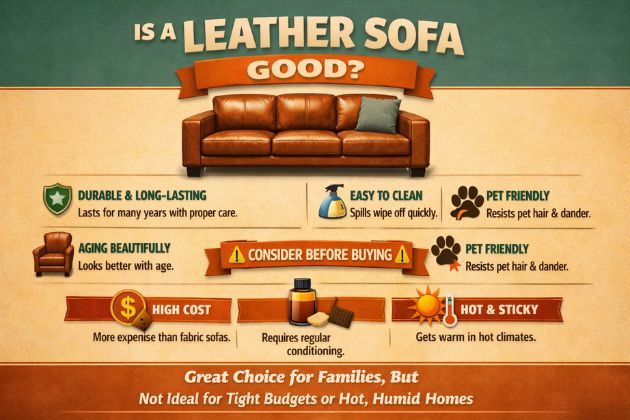
Table of Contents
Is a Leather Sofa Good?
Yes, a leather sofa is a good pick if you want a couch that lasts for years and still looks sharp. I have owned a top-grain leather sofa for close to six years now, and it still holds up well in my living room.
My first leather couch was a bonded leather model. It cracked within two years. Not all leather is the same. Genuine leather, like top-grain or full-grain, costs more, but it wears in, not out. My current sofa has small creases near the armrest now. They give it a warm, lived-in look instead of a worn-out one.
Leather reacts to the room. In my Texas apartment, the sofa gets warm and a bit sticky under direct sun in July. In winter, it feels cool for the first minute you sit down. If you live somewhere hot and humid, keep this in mind before you buy.
Leather sofas score well on durability and puncture resistance. Full-grain leather is the strongest, since it uses the whole hide with the natural grain intact. Bonded leather is the weakest, since it is made from scraps glued together with a coating on top.
What I Like
- It cleans up fast. I have two kids and a dog. When juice or coffee spills, I wipe it off with a damp cloth in seconds. Fabric never gave me that kind of peace of mind.
- It does not trap pet hair. My dog sheds a lot in spring. On my old fabric couch, hair worked its way into the weave and stayed there. On leather, it sits on top, so a quick wipe with a rubber glove clears it out.
- It looks better with age. The small scuffs and soft creases my sofa picked up over the years give it a patina that a brand-new leather piece just does not have. It feels like the couch has a story now.
What Could Be Better
- The price is steep. Genuine leather sofas cost far more than most fabric options. I paid close to $2,200 for mine, while a similar-size fabric sofa would have run me half that.
- It needs upkeep. Leather dries out if you skip conditioning. I apply a leather conditioner every eight months or so. Skip this step for too long, and the surface starts to crack.
- Pets with claws are a real risk. My dog does not scratch the couch, but a friend’s cat left deep marks on hers within a year. If you have a cat that scratches furniture, leather may not be the safest bet.

Recommendation
Go with a leather sofa if you want something that lasts fifteen years or more and you do not mind spending more upfront. It suits people with kids, since spills wipe off in seconds. It also works well if you want a clean, modern living room look, since leather pairs easily with mid-century modern, Scandinavian, or minimalist decor.
Skip it, or do more research first, if you own a cat that scratches, live somewhere hot with no strong air conditioning, or you are on a tight furniture budget. In that case, a faux leather or vegan leather sofa gives you a similar look for a lot less money, though it will not develop the same patina over time.
For US buyers: if you live in a dry, cold state, leather can crack faster indoors during winter heating season. A humidifier near the sofa, plus regular conditioning, keeps it from drying out.
Is a Fabric Sofa Good?
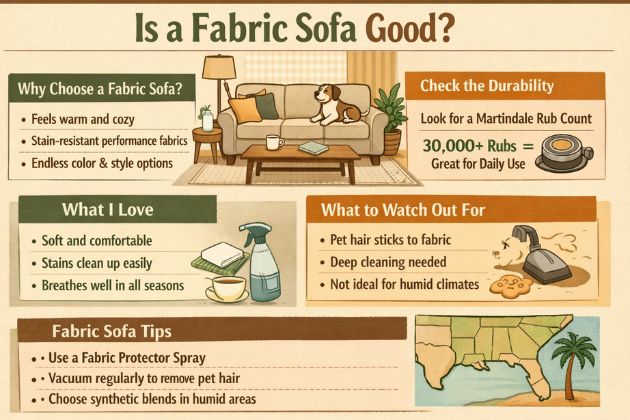
Yes, a fabric sofa is a good pick if you want a couch that feels warm and cozy right away. I switched from leather to a linen-blend fabric sofa in my living room two years ago, and it turned that room into the spot my family actually gathers in every evening.
My fabric sofa is a tight-weave polyester blend, close to what most brands call performance fabric. Last winter, my toddler spilled grape juice on the seat cushion. I sprayed it with a fabric protector spray ahead of time, and the stain lifted out with a damp cloth and mild soap. A friend’s older cotton sofa was not so lucky. A similar spill left a faint mark that never came out.
Fabric sofas feel warm to sit on, even in a cold room. My husband works from home and naps on it most afternoons. He has never once said it feels cold, unlike his old leather recliner. In summer, the fabric breathes, so no one sticks to the seat during a hot Georgia afternoon.
Fabric sofas vary a lot in durability. Look at the Martindale rub count on the tag. Anything above 30,000 rubs holds up well to daily use. My sofa is rated at 40,000, and after two years of two kids and one dog jumping on it daily, it still looks tight and even, with no pilling.
What I Like
- It feels warm and soft right away. I never had to break it in. The first day I sat down, it already felt like home. Leather never gave me that instant comfort.
- Stains lift out easily with the right fabric. My performance fabric couch has handled juice, coffee, and dog mud without a permanent mark. I keep a bottle of fabric protector spray in the closet and reapply it twice a year.
- The color options are endless. I picked a warm oatmeal tone that matches my rug and curtains. My old leather couch only came in black, brown, or gray at the store I visited.
What Could Be Better
- Pet hair sticks to the weave. My dog sheds year-round, and hair works its way into the fabric fibers. I vacuum the sofa twice a week to keep it under control.
- Not every fabric resists stains the same way. Cotton and linen soak up spills fast if you do not treat them. I learned this the hard way with a set of linen throw pillows that now have a faint wine stain.
- Deep cleaning takes more effort. Once a year, I hire someone to steam clean the cushions. A leather wipe-down takes two minutes. My fabric sofa needs a real cleaning day.

Recommendation
Go with a fabric sofa if you want a cozy feel from day one and you like having more color and pattern choices. It suits families with young kids, since a good performance fabric handles spills better than people expect. It also works well in colder climates, since it stays warm to sit on through the winter months.
Skip it, or do more research first, if you have a heavy-shedding dog and do not want to vacuum often, or if you tend to skip stain treatment and protector sprays. In that case, a tightly woven synthetic or a leather sofa may fit your routine better.
For US buyers: if you live in a humid state like Florida or Louisiana, pick a synthetic blend over natural cotton or linen. Synthetic fibers resist mildew and dry out faster after a spill, which matters a lot in high-humidity homes.
Leather Sofa vs Fabric Sofa: Detailed Comparison
I have owned both a leather sofa and a fabric sofa in my own home, so this comparison comes from real daily use.
Material Quality: Leather Sofa vs Fabric Sofa
Leather sofas use hide in different grades. Top-grain and full-grain leather feel thick and sturdy under your hand. Bonded leather feels thinner and often peels after a few years.
Fabric sofas use woven fibers like linen, cotton, polyester, or a blend. A tight weave feels smooth and holds its shape. A loose weave snags easily and looks worn faster.
My leather sofa has real weight to it. My fabric sofa feels lighter but still solid, since it uses a tight polyester blend.
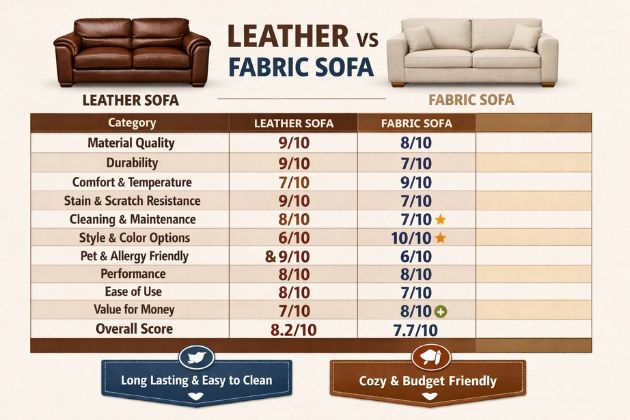
Rating: Leather Sofa – 9/10. Fabric Sofa – 8/10.
Durability: Leather Sofa vs Fabric Sofa
Leather resists punctures and holds up for fifteen to twenty years with basic care. My six-year-old leather sofa still looks tight at the seams.
Fabric durability depends on the Martindale rub count. Anything above 30,000 rubs handles daily use well. My fabric sofa is rated at 40,000 and shows no pilling after two years with two kids and a dog.
Leather wins on raw lifespan.
Rating: Leather Sofa – 9/10. Fabric Sofa – 7/10.
Comfort & Temperature: Leather Sofa vs Fabric Sofa
Leather feels cool at first touch and warms up once you sit for a few minutes. In a hot room, it can feel sticky against bare skin.
Fabric feels warm right away. My husband naps on our fabric sofa most afternoons and never complains about the cold, unlike his old leather chair.
If comfort matters more than looks, fabric wins this round for most homes.
Rating: Leather Sofa – 7/10. Fabric Sofa – 9/10.
Stain & Scratch Resistance: Leather Sofa vs Fabric Sofa
Leather wipes clean in seconds. Juice, coffee, and muddy paws come off with a damp cloth. Sharp claws are the real threat, since a determined cat can leave permanent marks.
Fabric resists stains only if treated with a fabric protector spray. My performance fabric sofa handled grape juice and coffee without a mark. A friend’s untreated cotton sofa still has a faint stain from one spill.
Leather is faster to clean, but treated fabric holds its own.
Rating: Leather Sofa – 9/10. Fabric Sofa – 7/10.
Cleaning & Maintenance: Leather Sofa vs Fabric Sofa
Leather needs conditioning every six to twelve months to stop it from drying out and cracking. Outside of that, a quick wipe keeps it looking fresh.
Fabric needs regular vacuuming, especially with pets in the house. I vacuum my sofa twice a week, and I steam clean the cushions once a year.
Leather takes less weekly effort. Fabric takes more upkeep but is more forgiving of small deep-cleaning gaps.
Rating: Leather Sofa – 8/10. Fabric Sofa – 7/10.
Style & Color Options: Leather Sofa vs Fabric Sofa
Leather comes in a narrow range of colors, mostly black, brown, tan, and gray. It suits modern, minimalist, and traditional rooms well.
Fabric comes in nearly unlimited colors, patterns, and textures. I picked a warm oatmeal tone to match my rug, something I never could have found in leather.
Fabric wins on variety by a wide margin.
Rating: Leather Sofa – 6/10. Fabric Sofa – 10/10.
Pet & Allergy Friendliness: Leather Sofa vs Fabric Sofa
Leather does not trap dust or pet hair, since hair sits on top and wipes away. It also does not hold dust mites the way soft fibers do. Sharp claws remain the main risk.
Fabric traps pet hair and dust deep in the weave. My dog sheds year-round, and hair works into the fibers no matter how often I vacuum.
For allergy-prone households, leather has a real edge.
Rating: Leather Sofa – 9/10. Fabric Sofa – 6/10.
Performance: Leather Sofa vs Fabric Sofa
Leather performs best for busy households that want fast cleanup and long-term use without much fuss. Fabric performs best for households that want comfort and do not mind a bit more upkeep.
Rating: Leather Sofa – 8/10. Fabric Sofa – 8/10.
Ease of Use: Leather Sofa vs Fabric Sofa
Leather is simple day to day. Wipe spills, condition it twice a year, done.
Fabric asks for more routine care, like vacuuming and occasional spot treatment, but none of it is hard to manage.
Rating: Leather Sofa – 9/10. Fabric Sofa – 7/10.
Value for Money: Leather Sofa vs Fabric Sofa
Leather costs more upfront. I paid close to $2,200 for mine, but I expect it to last fifteen years or more.
Fabric sofas cost less to start, often half the price of a comparable leather piece, though a lower-end fabric may need replacing sooner.
Fabric wins for upfront cost. Leather wins for cost spread across its lifespan.
Rating: Leather Sofa – 7/10. Fabric Sofa – 8/10.
Overall: Leather Sofa vs Fabric Sofa
Leather sofas suit buyers who want a long lifespan, fast cleanup, and a clean, structured look. Fabric sofas suit buyers who want warmth, comfort, and more design freedom.
Neither one is the wrong choice. It comes down to your household, your climate, and how much upkeep you want to handle.
Rating: Leather Sofa – 8.2/10. Fabric Sofa – 7.7/10.
Comparison Table
| Category | Leather Sofa | Fabric Sofa |
| Material Quality | 9/10 | 8/10 |
| Durability | 9/10 | 7/10 |
| Comfort & Temperature | 7/10 | 9/10 |
| Stain & Scratch Resistance | 9/10 | 7/10 |
| Cleaning & Maintenance | 8/10 | 7/10 |
| Style & Color Options | 6/10 | 10/10 |
| Pet & Allergy Friendliness | 9/10 | 6/10 |
| Performance | 8/10 | 8/10 |
| Ease of Use | 9/10 | 7/10 |
| Value for Money | 7/10 | 8/10 |
| Overall Score | 8.2/10 | 7.7/10 |
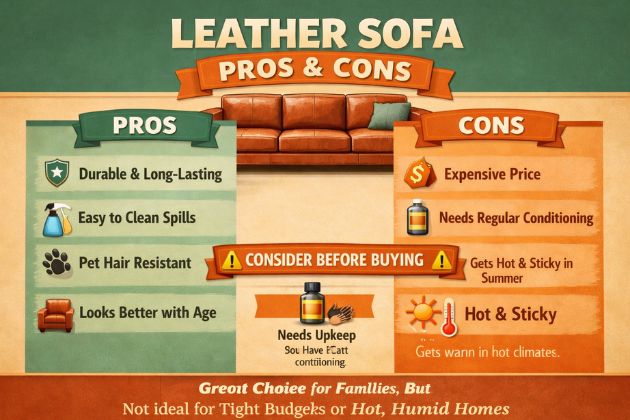
Pros and Cons
Leather Sofa
Pros
- Wipes clean in seconds
- Lasts fifteen to twenty years with basic care
- Does not trap dust, dander, or pet hair
- Develops a natural patina over time
Cons
- Feels cool in winter and sticky in summer
- Costs more upfront
- Needs conditioning every six to twelve months
- Limited color range
- Vulnerable to scratches from cat claws
Fabric Sofa
Pros
- Feels warm and soft right away
- Comes in nearly unlimited colors and patterns
- Costs less upfront
- Breathes well in warm weather
Cons
- Traps pet hair and dust in the weave
- Needs regular vacuuming and occasional steam cleaning
- Untreated fabric stains more easily
- Lower-end fabric may wear out sooner than leather
For US buyers, climate should guide this decision as much as budget. Homes in hot, humid states like Florida often do better with a breathable fabric, while homes in colder states with dry winter heat may want to add a humidifier if they choose leather, to keep it from cracking.
FAQs for Leather Sofa vs Fabric Sofa
Which is better, fabric or leather sofa?
Neither wins outright. Leather lasts longer and wipes clean fast. Fabric feels warmer and offers more colors. Pick based on your climate, pets, and budget.
What are the disadvantages of a leather sofa?
Leather costs more, feels cool in winter, and can turn sticky in summer heat. It also needs conditioning twice a year and scratches easily under sharp claws.
Do leather sofas last longer than fabric?
Yes, in most cases. Genuine leather often lasts fifteen to twenty years with basic care, while fabric sofas typically last seven to fifteen years, depending on the weave.
What is the healthiest type of sofa?
Leather is often the better pick for allergies, since it does not trap dust mites or pet dander. Fabric traps allergens deep in its fibers over time.
Which type of sofa material is best?
There is no single best material. Leather suits durability and easy cleanup. Fabric suits comfort and style variety. The right choice depends on your household needs.
Is leather better than fabric?
Leather beats fabric on durability, cleanup speed, and allergy control. Fabric beats leather on comfort, warmth, and color choice. Both are strong options for different lifestyles.
What is the lifespan of a leather sofa?
A well-cared-for leather sofa lasts fifteen to twenty years. Genuine top-grain or full-grain leather holds up far longer than bonded leather, which wears out sooner.
What is considered the most comfortable sofa?
Fabric sofas are generally considered more comfortable. They feel warm and soft right away, while leather can feel stiff or cool until it warms up from body heat.
What can damage a leather sofa?
Direct sunlight, sharp pet claws, and skipped conditioning all damage leather over time. Sunlight fades and dries the surface, while dry leather is more likely to crack.
Which type of sofa is best for long lasting?
Leather sofas made from top-grain or full-grain hide last the longest. For fabric, choose a tightly woven performance fabric rated above 30,000 Martindale rubs.
What to avoid when buying a couch?
Avoid bonded leather and loosely woven fabric, since both wear out fast. Also skip frames made from soft particleboard, since they weaken under regular daily use.
Which fabric color is best for a sofa?
Neutral tones like gray, beige, and oatmeal hide stains and match more decor styles. Darker colors also hide marks well, while bright whites show dirt fastest.