Paint Roller vs Paint Sprayer: Which Should You Use?
Paint roller vs paint sprayer: which one wins for your next job? A roller suits small rooms and tight budgets. A sprayer suits big, open jobs like siding or fences. I’ve painted both, from a guest room finished in one afternoon to a full house exterior sprayed in a weekend.
Table of Contents
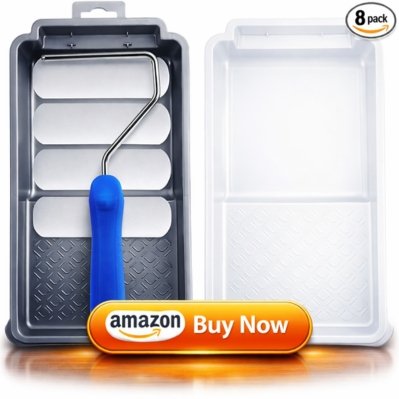
Is a Paint Roller Good?
Yes, a paint roller is a good pick for most home paint jobs. It’s simple. It’s cheap. It gets the job done well on walls, ceilings, and most flat surfaces.
I’ve used a roller on more rooms than I can count. Last spring, I painted a small guest room in one afternoon. Just me, a roller, a tray, and some tape on the trim. No mess, no fuss. A few months before that, I painted a rental apartment. I still lived in it at the time. Furniture stayed right where it was. I just moved each piece a few feet. I rolled the wall behind it. Then I moved it back. Try that with a sprayer and you’d need plastic sheets over half your stuff.
A roller soaks up paint in its cover. It lays that paint down as it rolls. The cover comes in different nap heights. A low nap suits smooth drywall. A thicker nap grips more paint. It suits rough spots, like stucco or brick. Grab the wrong nap and you’ll fight the wall all afternoon.
What I Like
- Easy setup. I can grab a roller, a tray, and a drop cloth. Then I’m painting in five minutes. No hoses, no tips, no waiting on a compressor to warm up.
- Low paint waste. Almost every drop I load onto the roller ends up on the wall. With a sprayer, I’ve watched a fine mist drift off. It lands on the floor, not the wall.
- Cheap to buy and replace. A basic roller kit runs $10 to $40. I’ve kept the same frame for years. I just swap the cover when it wears out.
What Could Be Better
- Slower on big jobs. I once painted a living room with vaulted ceilings. My arms gave out long before the walls were done.
- Some texture is left behind. Rollers leave a slight stipple. That’s fine for walls. But I would skip it on a cabinet door. A sprayer gives a smoother, glass-like coat there.
- Ceilings and tall walls take more work. An extension pole helps. But it’s still slower than a sprayer on high or wide walls.
Recommendation
If you’re painting a lived-in home or a small room, get a roller. It’s also the smart pick if you’re on a budget. It’s the easier tool to learn. Cleanup takes minutes, not an hour.
Painting an empty house? A full exterior? Cabinets and trim? A sprayer may serve you better there, with a smoother finish. Many U.S. painters use both tools. They spray large, open jobs like siding or new builds. Then they grab a roller for furnished rooms or small touch-ups.
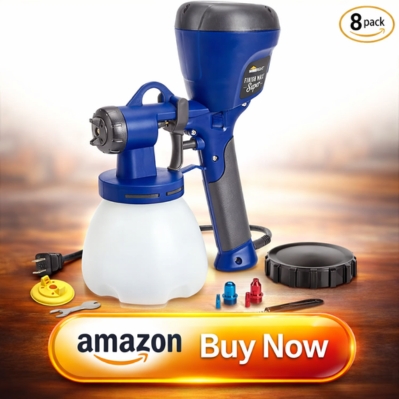
Is a Paint Sprayer Good?
Yes, a paint sprayer is a good pick for big, open jobs. It moves fast. It lays down a smooth coat. It’s not the right choice for one small room full of furniture.
I rented a Wagner sprayer last year to paint my house siding. The job covered three sides of the house, plus soffits and trim. A roller would have taken me a full weekend, maybe more. The sprayer got two coats done in a single Saturday. Before that job, I used a smaller sprayer on a porch railing. I also sprayed a mailbox post. Both had thin parts that a roller just can’t reach well.
A sprayer pushes paint out through a small tip. As the paint leaves the gun, it breaks into fine drops. This is called atomization. Most sprayers let you switch the spray pattern. A round shape suits tight trim. A wide fan shape suits open walls. Thicker paint needs thinning first. I check mine with a viscosity cup before I start. That keeps the paint flowing right through the tip.
What I Like
- Fast coverage on big surfaces. The siding job would have worn me out with a roller. The sprayer moved across each wall in a few passes.
- A clean, even coat. No streaks. No roller marks. Just a flat, smooth finish across the whole wall.
- Handles odd shapes well. Railings, posts, and trim corners are hard to brush or roll. The spray gun coats them all in one pass.
What Could Be Better
- Masking takes real time. Before I start, I cover windows, plants, and anything nearby. Overspray travels farther than you’d expect, especially outdoors on a windy day.
- Uses more paint than a roller. Some paint turns into fine mist and drifts off before it lands. On the same size job, I use more paint with a sprayer than with a roller.
- Cleanup is a real chore. Right after each job, I run water or thinner through the hose and gun. Skip that step, and the paint dries inside and clogs the tip.
Recommendation
Got a full exterior or a fence to paint? A set of railings? A sprayer will save you real time.
Want a smooth finish on cabinets or trim? Look for an HVLP sprayer instead of an airless one. It runs at lower pressure. That gives you more control on small, detailed pieces. This is common in U.S. kitchen updates, where cabinet doors need a clean, factory-style coat.
Painting one furnished room? Skip the sprayer. Masking and cleanup will cost you more time than a roller ever would.
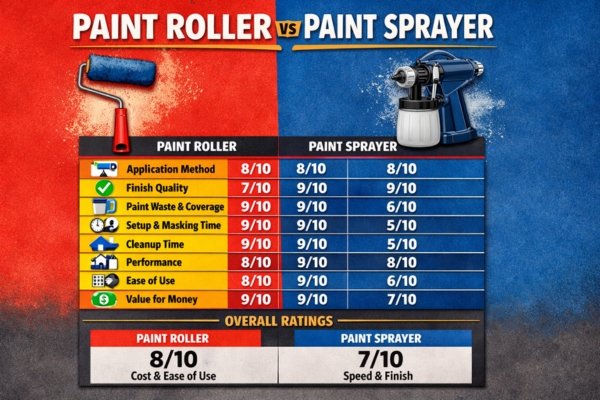
Paint Roller vs Paint Sprayer: Details Comparison
I’ve used both tools on real jobs, from small bedrooms to a full house exterior. Here’s how they stack up, feature by feature.
Application Method: Paint Roller vs Paint Sprayer
A roller soaks up paint in its cover. You roll it on by hand, one pass at a time. A sprayer pushes paint through a tip at high pressure. The paint breaks into fine drops and lands as a mist.
The roller gives you full hand control. The sprayer trades some control for raw speed. On a wall, I can feel the paint go on with a roller. With a sprayer, I’m guiding a fan of mist instead.
I like the roller for small, careful work. I like the sprayer when I just need to cover ground fast. Paint Roller: 8/10. Paint Sprayer: 8/10.
Finish Quality: Paint Roller vs Paint Sprayer
A roller leaves a slight texture, called stipple. It’s barely visible on walls, but it shows more on cabinets or trim. A sprayer lays down a smooth, even coat with no marks at all.
On my kitchen cabinet doors, the sprayer left no brush lines. It left no roller marks either. On plain walls, the roller’s texture never bothered me. Each tool wins on a different surface.
If you want a flawless, factory-style coat, the sprayer takes this round. Paint Roller: 7/10. Paint Sprayer: 9/10.
Paint Waste and Coverage: Paint Roller vs Paint Sprayer
A roller puts almost all its paint right on the wall. Very little goes to waste. A sprayer loses paint to overspray. That often means 15 to 33 percent more paint for the same job.
On the same size wall, I’ve refilled a paint tray far less than a spray gun. The sprayer moves fast, but it drinks paint faster too.
If you’re watching your paint budget, the roller wins here. Paint Roller: 9/10. Paint Sprayer: 6/10.
Setup and Masking Time: Paint Roller vs Paint Sprayer
A roller job needs a drop cloth and some tape on the trim. That’s about it. A sprayer job needs full masking. Windows, outlets, floors, and furniture all need cover before you start.
I can start rolling a wall in five minutes. Setting up a sprayer in a furnished room can eat up half my morning. Outdoors, the setup is faster, but you still need to protect nearby cars or plants.
For quick jobs, the roller is the clear winner. Paint Roller: 9/10. Paint Sprayer: 5/10.
Cleanup Time: Paint Roller vs Paint Sprayer
Cleaning a roller takes a few minutes. Rinse the cover, wipe the tray, done. Cleaning a sprayer takes real effort. You have to flush the hose, gun, and tip right after each job.
I’ve left a roller cover to dry out by mistake with no real harm done. Do that with a sprayer, and dried paint can clog the tip for good.
The roller is far more forgiving here. Paint Roller: 9/10. Paint Sprayer: 5/10.
Performance: Paint Roller vs Paint Sprayer
A roller performs best on walls, ceilings, and other flat, large surfaces. A sprayer performs best on big open areas, like fences, siding, and detailed pieces like cabinets or trim.
On a whole exterior, the sprayer’s speed makes a real difference. On a single room, the roller keeps up just fine and asks for far less setup.
Paint Roller: 8/10. Paint Sprayer: 8/10.
Ease of Use: Paint Roller vs Paint Sprayer
A roller is simple from the first use. Dip, roll, repeat. A sprayer takes more practice. You need the right paint viscosity and the right tip. You also need a steady hand to avoid drips.
My first time with a sprayer, I got a few runs on the wall. It took a minute to find the right pace. A roller never gave me that kind of learning curve.
First-time painters will find the roller far easier to pick up. Paint Roller: 9/10. Paint Sprayer: 6/10.
Value for Money: Paint Roller vs Paint Sprayer
A basic roller kit costs $10 to $40. A sprayer costs $100 or more for an entry-level model, plus masking supplies on top. Rollers also waste less paint, which saves money over time.
For a single room, the roller is the cheaper choice by a wide margin. For a full house exterior, the sprayer’s time savings can be worth the higher cost.
Value depends on the size of your job. Paint Roller: 9/10. Paint Sprayer: 7/10.
Overall: Paint Roller vs Paint Sprayer
A roller wins on cost, cleanup, and ease of use. A sprayer wins on speed and finish quality for large or detailed jobs.
I reach for a roller on almost every small or lived-in job. I reach for a sprayer only when the space is empty. I also reach for it when a job needs a smooth, pro coat.
Pick the roller for control and savings. Pick the sprayer for speed and a smooth finish. Paint Roller: 8/10. Paint Sprayer: 7/10.
Paint Roller vs Paint Sprayer: Rating Table
| Category | Paint Roller | Paint Sprayer |
| Application Method | 8/10 | 8/10 |
| Finish Quality | 7/10 | 9/10 |
| Paint Waste and Coverage | 9/10 | 6/10 |
| Setup and Masking Time | 9/10 | 5/10 |
| Cleanup Time | 9/10 | 5/10 |
| Performance | 8/10 | 8/10 |
| Ease of Use | 9/10 | 6/10 |
| Value for Money | 9/10 | 7/10 |
| Overall | 8/10 | 7/10 |
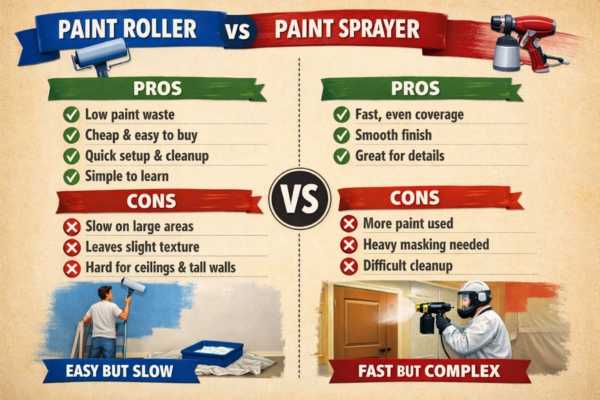
Paint Roller: Pros and Cons
Pros
- Low paint waste, almost all of it lands on the wall
- Cheap to buy, cheap to replace
- Fast, simple setup with just a tray and drop cloth
- Easy cleanup, done in minutes
- Simple to learn on the first try
Cons
- Slower on large or tall surfaces
- Leaves a slight texture, not ideal for cabinets or trim
- Ceilings and high walls take extra work, even with an extension pole
Paint Sprayer: Pros and Cons
Pros
- Fast coverage on large, open surfaces
- Smooth, even finish with no brush or roller marks
- Reaches tight shapes like railings, spindles, and trim with ease
Cons
- Uses more paint due to overspray
- Heavy masking needed before every job
- Cleanup takes real time and effort
- Steeper learning curve for first-time users
FAQ:
Q1 – roller vs sprayer for truck liners
No real fluff, but “gives a smoother, more even coat” is a bit redundant — smoother and more even coat overlap in meaning. Minor tightening possible.
Q2 – is sprayer better than roller
Clean. “with ease” at the end is filler — it adds nothing that “reaches tight corners” doesn’t already say.
Q3 – paint coverage difference
Solid, no fluff. Both sentences carry distinct info (why spray uses more, why rolling uses less).
Q4 – when to roll vs spray
Clean and tight. No filler words.
Q5 – when to use sprayer vs roller
Fine, but overlaps with Q1 and Q2 in content (“smoother finish,” “large surfaces/textured surfaces”) — that’s repetition across answers rather than fluff within one answer.
Q6 – stucco spray vs roll
Clean, specific reasoning, no filler.