Rug vs No Rug in Living Room: Which Looks Better?
Standing in an empty living room, wondering if you actually need a rug? After living with both a rug and a bare floor in my own home, I can tell you the rug vs no rug in living room choice comes down to comfort, cleaning, and what your floor looks like underneath. Here’s what I found with each one.
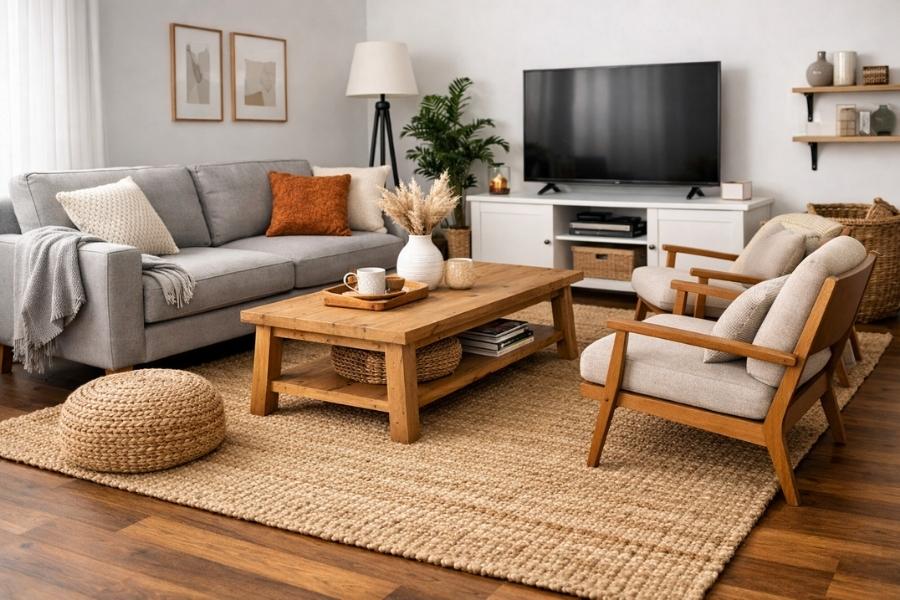
Table of Contents
Is a Rug Good for a Living Room?
Yes, a rug works well in most living rooms. I added a wool area rug under my sofa last winter. The room felt warmer within days. My floor is hardwood, and the wood stayed cold every morning before that.
A rug pad sits under the rug. It stops slipping and adds a soft layer under your feet. I picked a size that covers the front legs of my sofa, following a simple rug size guide rule. This is also how to place a rug under a sofa the right way: front legs on, back legs can stay off in tight rooms.
If you have laminate flooring, a rug still helps. It softens hard sound and hides small scratches. Open-plan living rooms benefit too, since a rug marks off the seating area without a wall.
What I Like
- It warmed up my room fast. The room felt cozy within a week of adding the rug. I noticed the change most on winter mornings.
- It tied my furniture together. Before the rug, my sofa and chairs looked spread out. Once I placed the rug under the coffee table and sofa, the whole set looked like one group instead of separate pieces.
- It added texture without much work. I picked a jute rug for a natural look. It fit my Scandinavian style decor, and it took five minutes to roll out. No tools, no fuss.
- It gave better footing in the room. My dog used to slide on the bare hardwood chasing his ball. Once the rug went down, he stopped skidding, and I stopped worrying about my toddler slipping too.
What Could Be Better
- Wool rugs cost more, especially in larger sizes. A standard 8×10 wool rug runs about $150 to $400. A jute rug in the same size costs closer to $50 to $150, though it feels rougher underfoot.
- Cleaning takes more time than a bare floor. Spills soak in fast, so I keep a stain remover close by.
- High-traffic spots wear a soft rug down faster. For busy areas, a tight wool weave or a synthetic blend holds up better than jute.
- Placement under a coffee table can be tricky. I moved my rug three times before I got it right. A simple rule: leave enough rug so all four legs of the coffee table sit on it, not just the front two.
Recommendation
Get a rug if your living room has hardwood or laminate flooring and feels cold or bare. A rug also helps in open-plan spaces, where you want to mark off the living area without a wall. If you have kids, older family members, or pets in the house, a rug adds traction that a bare floor can’t, which cuts down on slips.
Skip the rug, or keep it light, if you have underfloor heating built into your floor. Thick rugs can trap the heat and stop it from warming the room. A thin, natural-fiber rug works better in this case.
If you already have wall-to-wall carpet, you may not need a rug at all. An area rug vs wall-to-wall carpet choice comes down to comfort. Carpet already covers the whole floor, so a rug on top can feel like too much, unless you want to layer for a specific look. Rug layering ideas work best over plain, neutral carpet, not busy patterns.
If you’re renting, a small or mid-size rug is an easy way to protect the floor without any permanent change. Roll it up when you move, and you avoid scuffs that could cost you part of your deposit.
For US homes with open floor plans, a large rug for a living room helps define the seating zone from the dining or kitchen area.
If you want a clean, minimalist decor look, a bare floor with one small rug under the coffee table can be enough. A floor lamp, a large plant, or a patterned throw can add the rest of the warmth without a full rug.
Is No Rug Good for a Living Room?
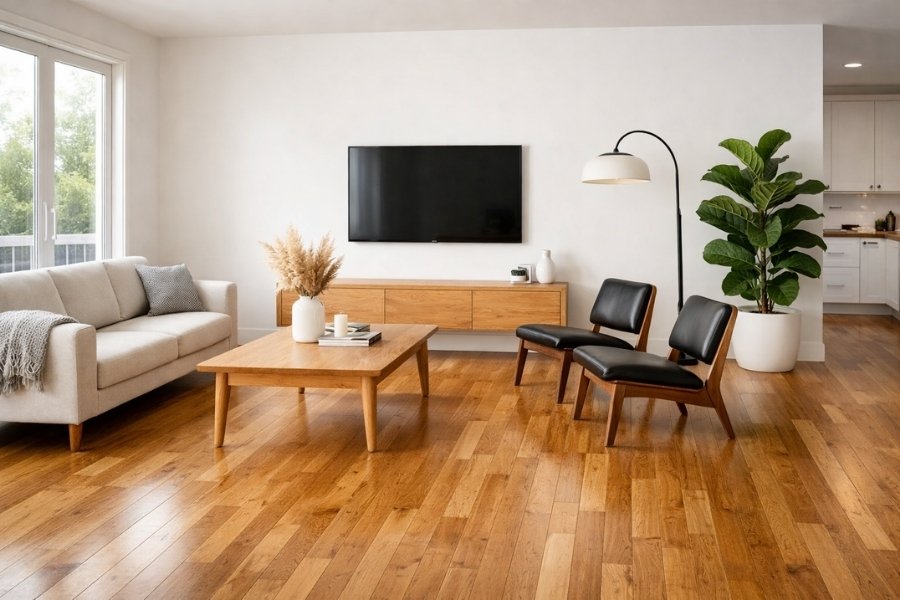
Yes, skipping the rug works well if you have good flooring to show off. I left my living room floor bare for two years. My floor is hardwood, and it stayed the star of the room without any rug on top.
Bare floors work best with hardwood flooring or laminate flooring in good shape. Scratches or dull spots show more without a rug, so check your floor condition first. Underfloor heating also works better without a thick rug on top, since a bare floor lets the heat reach the room faster.
If you’re weighing an area rug vs wall-to-wall carpet, going bare means neither. It’s just clean, open floor covering, nothing on top. This suits minimalist decor and Scandinavian style rooms.
What I Like
- Cleaning is fast. I sweep or mop once a week. No rug pad to lift, no vacuuming a thick pile.
- My hardwood floor gets to shine. Without an area rug or jute rug covering it, the wood grain stays the focus of the room.
- The room feels bigger. My living room connects to the kitchen, and a bare floor keeps one clean line running through both spaces.
What Could Be Better
- The room feels cold in winter. Bare hardwood loses warmth fast. I keep wool throws on the sofa to make up for it.
- Sound bounces more. Voices and footsteps carry without a rug or carpet to soften them.
- Furniture placement needs more thought. Without a rug to anchor the sofa and coffee table, I rely on furniture spacing alone to keep the room from feeling scattered. I use a large plant and a floor lamp to fill that gap.
- Bare floors can be slippery. Hardwood and laminate get slick fast, especially in socks. This matters most with young kids, older adults, or pets in the house. A small rug or a rug pad by the main walkway adds grip where you need it.
Read➡️ Living Room Furniture Mistakes
Recommendation
Go bare if your floor is in good shape and you like a minimalist decor look. It also works well if you have underfloor heating or if allergies are a concern in your home, since a bare floor holds less dust.
Add a rug back if the room feels cold, echoes too much, has visible wear, or if slipping is a real concern for anyone in your home. A rug pad and a rug that follows a proper rug size guide can fix all four problems at once.
If you’re renting and your lease requires you to protect the flooring, going bare only works if the floor is already in good condition. A cheap, small rug near high-traffic spots is a low-cost way to prevent scuffs without covering the whole room.
For US living rooms with open floor plans, a bare floor works well when the space gets good natural light and warm-toned furniture. Without that, the room can feel a bit flat.
A patterned throw, a floor lamp, or a large plant fill the visual gap a rug would normally take.
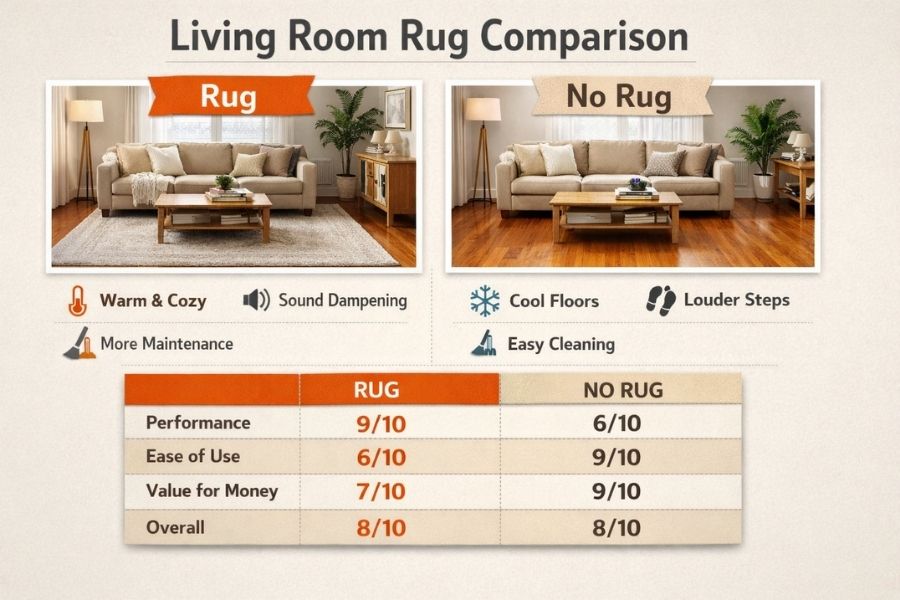
Rug vs No Rug in Living Room: Detailed Comparison
I’ve lived with a rug in my living room, and I’ve lived without one. Here’s how the two really stack up, based on what I saw in my own home.
Performance: Rug vs No Rug in Living Room
A rug wins on warmth and sound. My wool area rug kept the room warm on cold mornings, and it cut down on echo from the hardwood flooring underneath. A bare floor lets your interior design shine through, especially with good hardwood flooring or laminate flooring, but it stays cold and every footstep carries.
I noticed the biggest gap in winter. With the rug, I could walk barefoot without flinching. Without it, I reached for socks every time.
Rug performance: 9/10 No rug performance: 6/10
Ease of Use: Rug vs No Rug in Living Room
A bare floor wins here. I sweep or mop once a week, no rug pad to lift, no vacuuming a thick pile. A rug takes more upkeep, and getting the size right isn’t simple either. I used a rug size guide to figure out how to place a rug under a sofa, so the front legs stayed on the rug and the back legs stayed off.
Cleaning day made the difference clear. My bare-floor living room took ten minutes. The rug version took closer to thirty, once I factored in vacuuming and shaking out the edges.
Rug ease of use: 6/10 No rug ease of use: 9/10
Value for Money: Rug vs No Rug in Living Room
No rug costs nothing extra, so it wins on price alone. A wool rug typically costs two to three times more than a jute rug in the same size, and it holds up for years if you buy a well-made one.
I paid more upfront for my wool rug, but it held up for years without wearing thin, even in a high-traffic spot near the sofa. That made the cost feel fair over time.
Rug value for money: 7/10 No rug value for money: 9/10

Overall: Rug vs No Rug in Living Room
A rug gives you warmth, softer sound, better traction, and a finished look. No rug gives you speed, simplicity, and a floor that gets to be the star.
If you have underfloor heating, going bare makes more sense, since a rug can block the heat from reaching the room. If you want to layer rugs or need a large rug for a living room to mark off a zone in an open floor plan, the rug wins instead. For bare floor living room ideas, a floor lamp, a throw, or a plant fills the gap a rug would normally take.
Rug overall: 8/10 No rug overall: 8/10
Rug vs No Rug: Comparison Table
| Category | Rug | No Rug |
| Performance (warmth, sound) | 9/10 | 6/10 |
| Ease of Use (cleaning, placement) | 6/10 | 9/10 |
| Value for Money | 7/10 | 9/10 |
| Overall | 8/10 | 8/10 |
Quick Decision Checklist
Answer yes or no to these four questions:
- Does your floor echo or feel cold underfoot?
- Do you want to visually anchor or zone the seating area?
- Is your current floor a little worn or uneven?
- Do you have kids, older adults, or pets who need better footing?
3 to 4 yeses: get a rug. 1 to 2 yeses: go with a smaller rug, or add vertical touches like a lamp or plant instead. 0 yeses: skip it. Your floor is doing the job on its own.
Read➡️ 8 Best Furniture Resale Shops
Rug vs No Rug in Living Room: Quick Answers
Quick Answer
A rug or a bare floor comes down to trade-offs. Add a rug for warmth, softer sound, better traction, and a finished look. Skip the rug for faster cleaning, fewer allergens, and a chance to show off good flooring.
Does a rug make a room look bigger or smaller?
A rug makes a room look bigger when it’s sized right, and smaller when it’s too small for the space.
A rug that only covers part of the seating area cuts the room into pieces and makes it feel cramped. A rug that reaches under the front legs of your sofa and chairs pulls the space together instead. A bare floor reads as bigger too, since there’s nothing breaking up the space.
What size rug should I get for my living room?
Most living rooms need an 8×10 or 9×12 rug, large enough for the front legs of your sofa and chairs to sit on it.
Measure your seating area first, not just the room, and use a rug size guide. Leave about 12 to 18 inches of bare floor around the rug’s edge if your living room is on the larger side.
Are rugs hard to clean with pets?
Rugs take more cleaning work with pets than a bare floor does, mainly due to shedding and accidents.
Fur works into the pile of a rug, and stains sit deeper than they would on hardwood or laminate flooring. A washable rug, or a tight wool weave, holds up better around pets than a loose jute rug.
Can I use a rug on carpet?
Yes, you can place a rug on top of carpet, and it works best over a low-pile, plain-colored wall-to-wall carpet.
A rug pad helps stop shifting on thicker carpet. Rug layering over carpet works well for adding color or texture, but it isn’t a fix for a worn-out carpet underneath.
Are rugs safer than a bare floor?
Yes, a rug adds traction that a bare floor doesn’t have, which lowers the risk of slipping.
This matters most for young kids learning to walk, older adults, and pets that run or play on hard flooring. A rug pad underneath adds extra grip, especially near high-traffic paths like the space in front of a sofa.