Are Bathroom Renovations Worth It? Benefits, Costs & Smart Upgrade Ideas
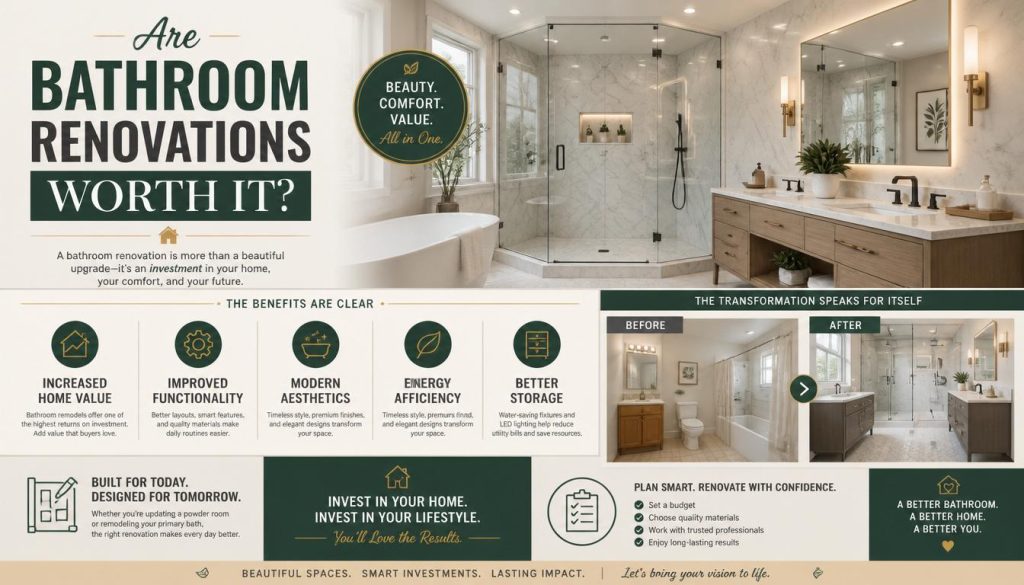
You can make money back and enjoy daily comfort, but whether a bathroom renovation is worth it depends on your budget, timeline, and goals. If you choose a midrange remodel with smart material and layout choices, you can boost your home’s value and improve everyday life without overspending.
Think about how you use the space now and what you want it to do for you. Small changes can deliver big comfort gains; bigger overhauls can add equity but cost more and take longer.
are bathroom renovations worth it
Key Takeaways
- Choose scope and finishes that match your budget and resale goals.
- Focus on upgrades that improve daily comfort and function.
- Plan for costs, timeline, and potential trade-offs before you start.
Evaluating Return on Investment
You’ll weigh resale value, ongoing costs, and how a bathroom project stacks up against other home work. Focus on concrete numbers for your market, expected lifespan of materials, and which upgrades buyers pay for. are bathroom renovations worth it
Factors That Influence Resale Value
Location, home size, and buyer expectations drive how much value a bathroom adds. In many U.S. markets, a midrange remodel often recoups a large portion of cost; for example, midlevel projects tend to outperform high-end renovations at resale. If your home has fewer bathrooms than comparable houses nearby, adding or upgrading a bathroom usually raises appeal and sale price more than cosmetic changes.
Choices matter: replacing old fixtures, updating tile and lighting, and improving ventilation give clear, measurable boosts. Avoid overbuilding for your neighborhood—a luxury spa bath rarely pays off in a modest area. Track recent local sale prices of homes with similar upgrades to set realistic return expectations.
Long-Term Savings and Costs
Think beyond sale price. Durable materials and efficient fixtures lower ongoing expenses and can make the remodel pay back through utility and maintenance savings. Installing a low-flow toilet, LED lighting, and a water-efficient shower reduces monthly bills and may appeal to energy-conscious buyers.
Upfront costs include labor, permits, and potential mold or plumbing surprises. Factor in a lifespan estimate: quality fixtures last 10–20 years; grout and caulk need attention sooner. Plan for a buffer—10–20% of the project cost—for unforeseen repairs. These calculations help you judge whether savings and increased home value justify the spend. are bathroom renovations worth it
Comparison With Other Home Improvements
Compare ROI, cost, and urgency when choosing projects. Kitchens and curb appeal often rank highest for resale value, but bathrooms offer strong returns for lower budgets. A modest bathroom update can cost far less than a full kitchen remodel while still improving buyer interest.
Use a simple checklist to decide:
- Cost vs. expected resale uplift
- How many comparable homes have updated bathrooms
- Immediate quality-of-life benefits for you
If you need both resale value and daily comfort, prioritize a functional bathroom upgrade. If maximizing resale price is the goal and your kitchen is dated, consider reallocating funds there.
Impact on Daily Living
A bathroom update can make your routine faster, safer, and less frustrating. Small changes like better lighting, a new layout, or lower-maintenance finishes often matter more every day than big luxury features. are bathroom renovations worth it
Enhancing Comfort and Accessibility
You’ll notice comfort when you add features that match how you use the room. Install a walk-in shower, a comfort-height toilet, and grab bars to make bathing and moving safer if you have limited mobility. Heated floors and a more powerful exhaust fan improve comfort by cutting chill and humidity.
Choose lever handles instead of knobs and a single-lever faucet for easier use. Wider doorways and a curbless shower let you move in and out with less effort. These changes lower fall risk and make the bathroom usable for guests of all ages.
Improving Functionality
Function matters every time you use the room. Reorganize the layout to reduce crowded counters and give you clear zones for showering, dressing, and storage. Swap a small vanity for one with drawers and built-in organizers to store towels, medicines, and grooming tools where you need them. are bathroom renovations worth it
Upgrade fixtures like a low-flow, high-pressure showerhead and a dual-flush toilet to keep performance while saving water. Add task lighting around mirrors and motion-sensor lights for night trips. These adjustments speed up routines and cut the friction in daily tasks.
Reducing Maintenance Needs
You’ll spend less time cleaning with smart material choices and simpler designs. Pick large-format porcelain tiles, quartz countertops, and a one-piece toilet to reduce grout lines and seams that trap grime. Glass shower panels with a protective coating clean faster than textured curtains.
Install wall-mounted vanities to make floor cleaning easier and use mildew-resistant grout and paint in high-humidity areas. Choose matte finishes that hide water spots and faucets with easy-clean aerators. These choices lower your cleaning time and decrease the chance of water damage over the years. are bathroom renovations worth it
Assessing Project Scope
You should decide how much work you want and what results you need. Focus on budget, timeline, and which parts of the bathroom must change to meet safety, function, or resale goals.
Minor vs. Major Bathroom Upgrades
Minor upgrades change surface items and take days to weeks. Examples: swapping a vanity, replacing a toilet, regrouting tile, painting, and installing new lighting or fixtures. These typically cost much less and let you fix looks and function without moving plumbing or walls. You can often do parts yourself or hire one or two trades (plumber, electrician).
Major upgrades involve layout changes, plumbing moves, or replacing showers and tubs. They take weeks to months and usually need a contractor, permits, and multiple trades. Expect higher costs when you move drains, add ventilation, or replace subflooring. Major work can solve accessibility issues or add a second sink, but plan for demolition, waterproofing, and a longer disruption to your home.
Customization Based on Homeowner Needs
Identify three top priorities for your household before you start. For example: safer shower access for aging occupants, more storage for a growing family, or upscale finishes to improve resale value. Match scope to that priority: choose grab bars and a curbless shower for safety, deeper cabinets and a linen closet for storage, or high-end tile and fixtures for aesthetics.
Think about long-term use and maintenance. Durable materials and simple layouts save money later. Also check local resale trends: a costly luxury finish may not return its price in your neighborhood. are bathroom renovations worth it
Budgeting and Cost Considerations
You need a clear budget that covers materials, labor, permits, and a contingency for problems. Prioritize fixtures, labor rates in your area, and whether you’ll hire pros or DIY parts of the job.
How to Plan for Unexpected Expenses
Set aside a contingency of 10–20% of your total budget. This covers hidden water damage, old wiring, or structural issues found during demolition.
Ask your contractor for a written change-order process. That tells you how much extra work costs and how decisions get approved.
Budget separately for permits and inspections; fees commonly range from $100 to $1,000 depending on location and scope. Get estimates from at least two plumbers and one electrician before you start to spot potential red flags.
Keep a small “tool and consumables” fund for grout, sealant, and fasteners. These small buys add up and are often overlooked in initial quotes.
Cost Breakdown by Renovation Type
Cosmetic refresh: Replace vanity, fixtures, and paint. Expect $3,000–$8,000 for average small bathrooms when you don’t move plumbing.
Mid-range remodel: Swap tub or shower, update tile and lighting, and replace flooring. Typical costs run $8,000–$20,000 depending on materials and labor.
Full renovation / layout change: Moving plumbing or expanding the footprint raises costs to $20,000–$50,000+. Demolition, new drains, and structural work drive prices up.
Labor often makes up 15–40% of the project. Demolition and tile work are labor-heavy items that can shift your budget quickly. Use a short checklist to compare bids: scope, timeline, warranty, and included permits. are bathroom renovations worth it
Financing Options
Home equity loans and HELOCs usually offer lower interest than personal loans. Use them if you plan to stay in the home long enough to spread the cost.
Personal loans and credit cards provide faster access but often at higher interest. Reserve these for smaller projects or when you need quick funds.
Contractor financing can work if the lender’s terms are clear. Always read the fine print for variable rates and prepayment penalties.
Consider splitting the project into phases if cash flow is tight. Complete essential work first, like waterproofing and plumbing, then finish cosmetic touches later.
Design and Material Choices
Focus on fixtures that last and styles that buyers accept. Pick materials that match your budget, resist water damage, and keep maintenance low.
Selecting Durable Fixtures
Choose faucets and showerheads with solid brass or stainless steel bodies and ceramic disc valves. Those parts resist leaks and cut down repair bills. Look for finishes labeled PVD or brushed nickel to hide water spots and last longer than cheap chrome.
For tubs and sinks, prefer cast iron or cultured marble for durability. Acrylic can work but scratches easier. Pick porcelain or glazed ceramic tiles with a slip-rated floor tile (DCOF ≥ 0.42) near wet areas to reduce accidents. are bathroom renovations worth it
Plan for easily replaceable parts: cartridge faucets, standard drain fittings, and common-size vanity cabinets. That saves money if you need repairs later. Finally, install water-efficient fixtures with WaterSense or low-flow ratings to lower utility costs and appeal to eco-minded buyers.
Trends Affecting Value
Neutral palettes sell better than bold colors. White, gray, and warm beige keep the space feeling clean and make it easier for buyers to picture their own style. Use simple hardware—matte black or brushed nickel—so fixtures look modern without dating the room.
Open layouts and walk-in showers increase perceived value in midrange homes. Frameless glass, tile niches, and linear drains are features buyers notice. Heated floors and smart controls add comfort but cost more; limit these to high-end projects where ROI is clearer.
Durable, low-maintenance materials attract buyers. Porcelain plank tile, quartz countertops, and painted semi-solid wood cabinets balance style and longevity. Match your choices to local market expectations to avoid over-improving for the neighborhood.
Environmental and Energy Benefits
You can cut water use and lower energy bills with the right bathroom changes. Small fixtures and better materials make measurable differences in utility costs and the home’s environmental footprint. are bathroom renovations worth it
Water-Efficient Upgrades
Swap showerheads to models that use 1.5 gallons per minute (gpm) or less instead of the common 2.5 gpm. That change alone can save dozens of gallons per shower. Install a dual-flush or low-flow toilet; models using 1.28 gallons per flush or a dual option reduce water use by 20–60% compared with older 3.5–6.0 gpf units.
Add an aerator to the sink faucet to cut flow to 0.5–1.0 gpm without losing pressure. Consider a water-efficient shower valve or a thermostatic mixer to shut off water while you lather. Use a simple table to compare typical fixtures:
- Showerhead: 2.5 gpm → 1.5 gpm = ~40% water savings
- Toilet: 3.5 gpf → 1.28 gpf = ~63% water savings
- Faucet aerator: 2.2 gpm → 1.0 gpm = ~55% water savings
These upgrades often pay back in reduced bills within a few years, especially if multiple fixtures are replaced. are bathroom renovations worth it
Eco-Friendly Materials
Choose durable, low-VOC materials to lower indoor air pollution and reduce replacement frequency. Tile, porcelain, and natural stone last longer than cheap laminates and keep waste down over time. For cabinetry and trim, use FSC-certified or reclaimed wood to cut deforestation impact.
Pick adhesives, paints, and sealants labeled “low-VOC” or “zero-VOC.” They lower fumes during and after installation, which matters if you or family members have sensitivities. Also consider recycled-content countertops and rapidly renewable materials like bamboo for flooring. These choices may cost more up front but reduce maintenance and disposal costs later, and they support a healthier home environment.
Potential Drawbacks and Risks
Renovations can raise costs, cause delays, or reduce resale return if you pick the wrong scope or finishes. Mistakes in planning or execution often cause the biggest problems and can be costly to fix. are bathroom renovations worth it
Common Renovation Mistakes
You can overspend by changing the scope mid-project. Swapping fixtures or moving plumbing after work starts adds labor and materials. Get final decisions and written change-order costs before demolition.
Poor layout choices create daily annoyances. Placing a vanity where a door swings, or installing tight shower controls, makes the space less usable. Mock up the layout with tape or cardboard to test clearances.
Inadequate ventilation leads to mold and paint failure. Make sure you size exhaust fans to the room’s volume and run them on a timer. Also check that duct runs are short and vent to the outside.
Hiring the wrong contractor brings delays and substandard work. Check references, verify licenses and insurance, and get a detailed written contract with timelines and payment milestones.
Overcapitalization Risks
You may spend more than the market will support for your neighborhood. High-end tiles, luxury fixtures, and moving walls can cost tens of thousands but may not increase sale price by the same amount. Compare expected renovation cost to similar homes nearby.
Personalized or trendy choices can limit buyer appeal. Bold tile patterns or custom colors might suit you but narrow your future buyer pool. Stick to neutral finishes if resale is likely within a few years.
Major structural changes carry higher unseen costs. Moving plumbing or walls often exposes hidden issues like rot or outdated wiring. Budget at least 10–20% extra for unexpected repairs.
Timing affects return on investment. If you plan to sell soon, a midrange refresh typically offers better payback than a total high-end overhaul. Get local cost vs. value data to guide how much to spend. are bathroom renovations worth it
Making the Right Decision
Start by listing your goals. Do you want higher resale value, better function, or improved comfort? Rank those goals so you can choose which upgrades matter most.
Check costs against local market trends. Midrange bathroom renovations often run between $15,000 and $25,000. Compare that to home values in your neighborhood to see if the likely return makes sense.
Think about timing. If you plan to sell soon, focus on neutral finishes and cost-effective upgrades like new fixtures, lighting, and fresh paint. If you plan to stay, prioritize long-term quality items such as waterproofing, ventilation, and durable tile.
Create a simple budget with must-haves and nice-to-haves. Use a table like this to keep choices clear:
| Must-haves | Nice-to-haves |
|---|---|
| Fix leaks | Heated floors |
| Replace worn fixtures | High-end tile |
| Improve ventilation | Custom cabinetry |
Get at least three quotes from licensed contractors. Ask for itemized estimates and timelines. That helps you compare prices and spot hidden costs.
Weigh non-monetary factors too. Consider daily comfort, safety for older family members, and how much disruption you can tolerate. Those factors often sway the decision more than projected ROI.
Finally, set a contingency of 10–20% in your budget. Surprises happen, and a buffer keeps the project from stalling or forcing poor choices.
FAQS
How much will a bathroom renovation cost?
Costs vary by scope. A midrange remodel often falls between about $15,000 and $25,000, while simple updates cost less and luxury projects cost more.
Will a remodel raise my home’s value?
Yes, but the return varies. Midrange projects typically recover a significant portion of the cost, while high-end renovations may recoup less at resale.
How long does a remodel take?
Small updates can take a few days to a week. Full remodels usually run several weeks to a few months, depending on permits, plumbing changes, and material lead times.
Do I need permits?
You often need permits for major plumbing, electrical, or structural work. Check local rules before you start to avoid fines and delays. are bathroom renovations worth it
Should you hire a professional or DIY?
Hire a pro for plumbing, electrical, or structural work. DIY can save money on cosmetic tasks, but mistakes can cost more later.
What upgrades give the best value?
Focus on durable fixtures, good lighting, and efficient plumbing. These choices balance cost, function, and buyer appeal.
How can you control costs?
Set a clear budget, get multiple bids, and choose midrange materials. Plan for a 10–20% contingency for surprises.
Quick checklist before you start:
- Define your goals and budget.
- Get at least three quotes.
- Confirm permits and timelines.
- Plan for temporary bathroom access during work.
Tag:
Is it worth doing a bathroom renovation?
What does a $10,000 bathroom remodel look like?
What to avoid when renovating a bathroom?
What adds the biggest value to a house?


